

Daraxonrasib Demonstrates Superiority Over Chemotherapy in Metastatic Pancreatic Adenocarcinoma
Daraxonrasib nearly doubled overall survival (OS) in patients with previously treated metastatic pancreatic adenocarcinoma (mPDAC) in a phase 3 study, according to a presentation at the ASCO 2026 Meeting. The presentation received multiple rounds of applause because of its potentially practice-changing implications for one of the most notoriously difficult cancers to treat.
Brian Wolpin, MD, MPH of the Dana-Farber Cancer Institute discussed the key findings of the RASolute 302 study, which investigated the efficacy of the RAS(ON) multi-selective inhibitor daraxonrasib compared with chemotherapy.
Outcomes for patients diagnosed with pancreatic cancer remain consistently poor. With standard chemotherapy, median progression-free survival (PFS) is approximately 3 to 4 months, while median overall survival is only 6 to 7 months. More than 90% of pancreatic cancers harbor an oncogenic RAS mutation. Excessive RAS(ON) signaling promotes tumor growth, yet there are currently no approved RAS-targeted therapies for pancreatic cancer.
Participants in this trial were adults with mPDAC who had received one prior line of chemotherapy. They were randomized in a 1:1 ratio to receive either oral daraxonrasib 300 mg once daily or standard-of-care chemotherapy. The primary endpoints were OS and PFS among patients harboring a RAS G12 mutation. Secondary endpoints included OS and PFS in the overall study population, ensuring that patients with no RAS mutations or less common RAS mutations were also evaluated.
A total of 500 participants were randomized to receive either daraxonrasib or chemotherapy. Data were analyzed as of the February 2026 cutoff. At that time, 42% of patients assigned to daraxonrasib remained on treatment, compared with 14% of those assigned to chemotherapy.
Ninety-two percent of patients harbored a RAS G12 mutation; the remaining 8% either had no RAS mutation or had less common RAS mutations.
For the primary endpoint population, median OS was 13.2 months in the daraxonrasib arm versus 6.6 months in the chemotherapy arm. In the overall study population, which included patients with less common or no RAS mutations, median OS was 13.2 months with daraxonrasib versus 6.7 months with chemotherapy.
Notably, treatment-related adverse events led to treatment discontinuation in only 1% of patients receiving daraxonrasib, compared with 11% of patients receiving standard-of-care chemotherapy.
“Daraxonrasib met all primary and key secondary endpoints, including statistically significant and clinically meaningful improvements in OS, PFS, and objective response rate (ORR) in patients with previously treated mPDAC,” Dr. Wolpin concluded. “Results from RASolute 302 support daraxonrasib as a new standard of care for patients with previously treated mPDAC.”
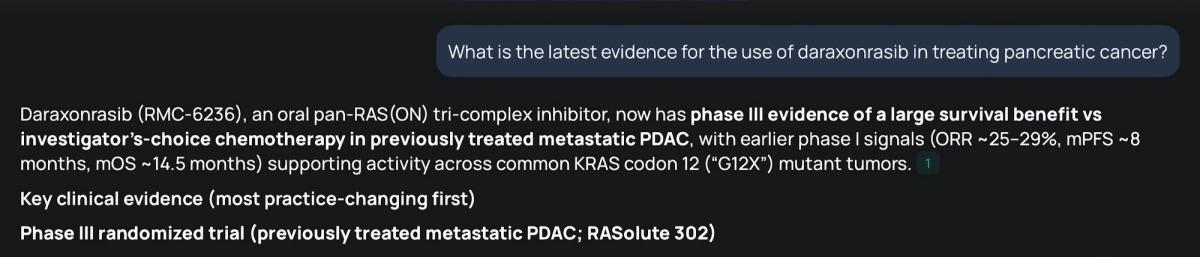
These groundbreaking findings are already integrated into Vera Health's clinical search engine, which aims to provide clinicians with the most up-to-date information regarding clinical best practices and therapeutic breakthroughs. For example, a simple search about the potential use of daraxonrasib in treating pancreatic cancer surfaces this evidence directly within the clinician's workflow.
Reference
Wolpin BM, Wainberg ZA, Hendifar A, et al. Daraxonrasib, a RAS(ON) multi-selective inhibitor vs chemotherapy in previously treated metastatic pancreatic adenocarcinoma (mPDAC): Primary and final analysis from the phase 3 RASolute 302 study. ASCO 2026. May 29 – June 2, 2026. Chicago, IL. Abstract LBA5.


